Glyphosate, aspen and B.C. wildfire risk: what the Facebook post gets right and overstates
A Facebook post says B.C. forests are being “primed to burn” because corporate forestry and government-backed herbicide spraying remove trembling aspen, birch and other broadleaf trees. The careful verdict: there is a real forestry-resilience question here, but the post overstates several points that need primary records.
Short verdict
Real kernel: forest composition matters. B.C.’s own silviculture page says diversity in tree ages, species and structures increases resistance to pests, fire and climate change.
Real policy question: forestry herbicide and brushing practices that suppress broadleaf/aspen regeneration deserve public scrutiny, especially in fire-prone landscapes.
Overclaim: this post does not prove the exact 430,000-hectare number, a current NDP-funded helicopter program, or intentional media protection of logging companies. Those require permits, funding records, RESULTS data and newsroom evidence.
What the Facebook post claims
The post says Okanagan/B.C. fires are not “just climate change,” and argues that timber-focused forestry practices remove moisture-rich broadleaf trees that could slow fire spread. It says taxpayers subsidize herbicide spraying, specifically glyphosate, to kill trembling aspen and birch so pine/spruce plantations can grow for timber value.
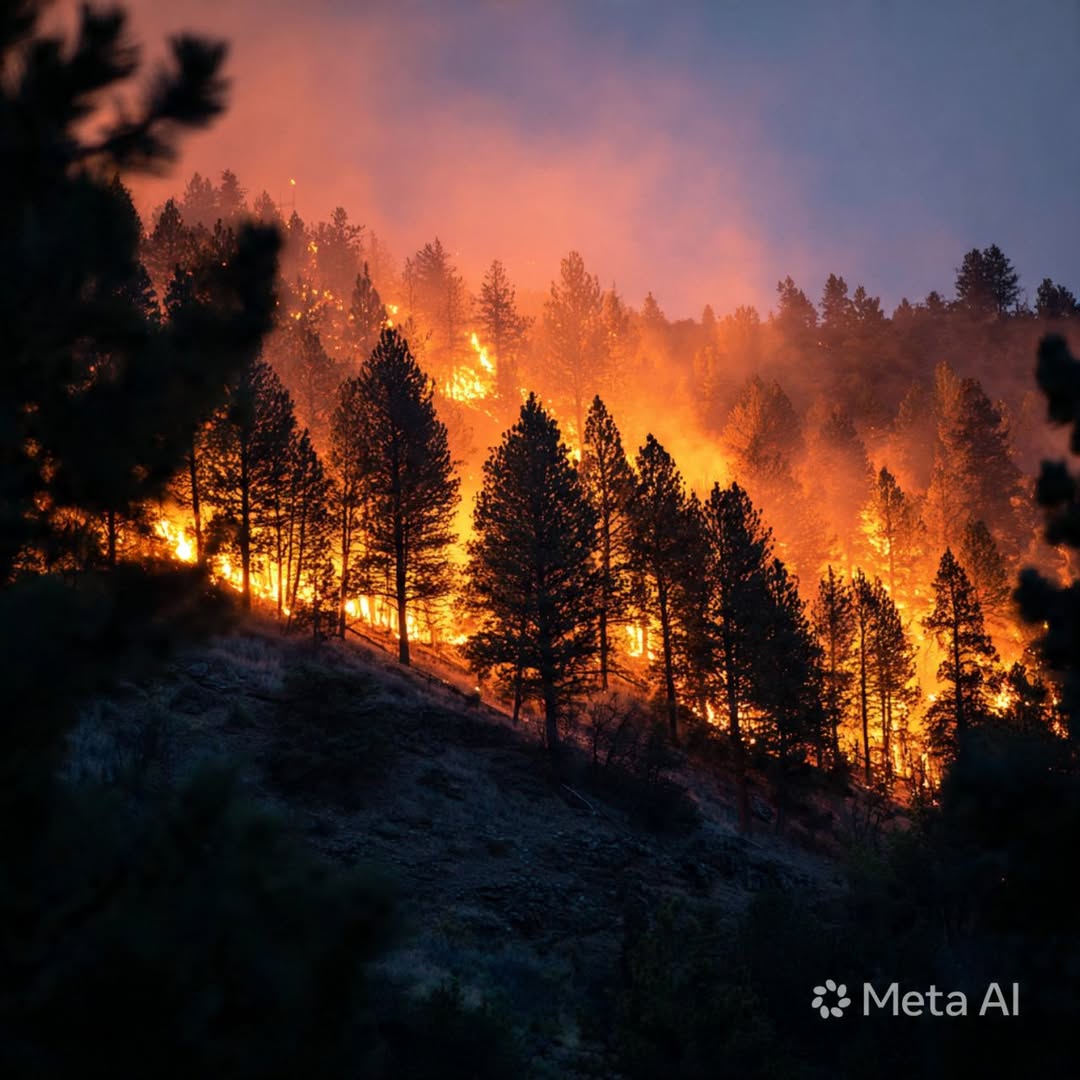
The attached image is not evidence: it is an AI-generated or AI-composited wildfire illustration with a visible Meta AI watermark.
Claim table
| Claim | Evidence label | Finding |
|---|---|---|
| Facebook post exists and says corporate forestry/glyphosate/broadleaf removal is a hidden wildfire factor. | Confirmed social-post claim | The public Facebook post by MaryAnn Gill was visible and preserved. It tags CBC/Global/CTV and claims media are silent on forestry herbicide/broadleaf removal. |
| The post image proves a real wildfire or cause. | Not evidence | The attached image has a visible Meta AI watermark. It is a dramatic illustration, not proof of any specific fire, location or cause. |
| B.C. allows pesticide/herbicide use and regulates it through IPM rules. | Supported generally | B.C.’s pesticide and pest-management page confirms pesticide use is regulated and sometimes pesticides are used to control pests; business/industry users require authorizations/training according to context. |
| B.C. forestry policy values mixed species/age/structure diversity for resilience. | Supported | B.C.’s silviculture page states that diversity increases resistance to pests, fire and climate change and helps forests recover after disturbances. |
| Broadleaf/aspen removal has a real fire-resilience question. | Supported directionally | Stop the Spray documents cite studies arguing aspen/broadleaf stands burn less readily than conifers; B.C. also says diversity helps fire resilience. The general question is legitimate. |
| “Aspen trees are nature’s shields / natural firebreaks.” | Partly supported, simplified | Aspen/broadleaf stands can be less flammable and more moisture-rich than many conifer stands, but no single tree species is an absolute firebreak under extreme wind/drought/crown-fire conditions. |
| Since the 1970s, logging companies dumped toxic chemicals over more than 430,000 ha of B.C. forest land. | Not verified in this check | This exact number was not recovered from a primary B.C. government data table in this pass. Stop the Spray’s 2024 letter makes an even broader “close to 1.5 million hectares brushed and sprayed” advocacy claim, but that also needs a direct RESULTS/export table before being treated as official. |
| The current NDP government is funding helicopters to spray glyphosate for timber corporations. | Needs documents | The post’s funding/beneficiary claim needs specific current contracts, permits, Forest Enhancement/Silviculture funding records, pesticide-use notices or RESULTS entries. PBC/BCFires should ask for those records rather than state it as proven. |
| Media are silent because they protect corporate logging/provincial optics. | Opinion / not proven | There is public media history around forestry herbicide concerns, including outlets cited by Stop the Spray. A motive claim about silence/protection requires newsroom evidence. |
| Climate change is the only explanation for Okanagan/B.C. fires. | False framing | Wildfire risk is multi-factor: climate/weather, drought, wind, fuels, forest structure, ignitions, suppression history, terrain and land management all matter. |
What should be demanded next
- Annual B.C. forestry herbicide application tables by product, hectare, region and proponent.
- RESULTS database exports for chemical brushing and manual brushing by year and ecosystem/region.
- Current contracts, permits and funding streams for aerial herbicide work on Crown forest land.
- Fire-behaviour comparison work for mixed broadleaf/conifer stands versus simplified conifer plantations in B.C. Interior conditions.
- Whether B.C.’s stocking standards and “free growing” rules still incentivize broadleaf suppression in high-risk fire landscapes.
Safety note
If life or property is at immediate risk, call 911. To report a wildfire in B.C., call 1-800-663-5555 or *5555 from a cellphone.